Meet Your AI Agent

Request Your AI Agent Consultation

Webinar Overview

Families and prospects expect timely answers—whether they call after hours, visit a website, send a message, or request information about cremation, pre-need planning, or funeral services. When staff are already serving families, answering phones, managing arrangements, or following up with leads, even a short delay can result in a missed opportunity. Public-facing AI Agents can help firms respond faster while keeping staff informed and in control.

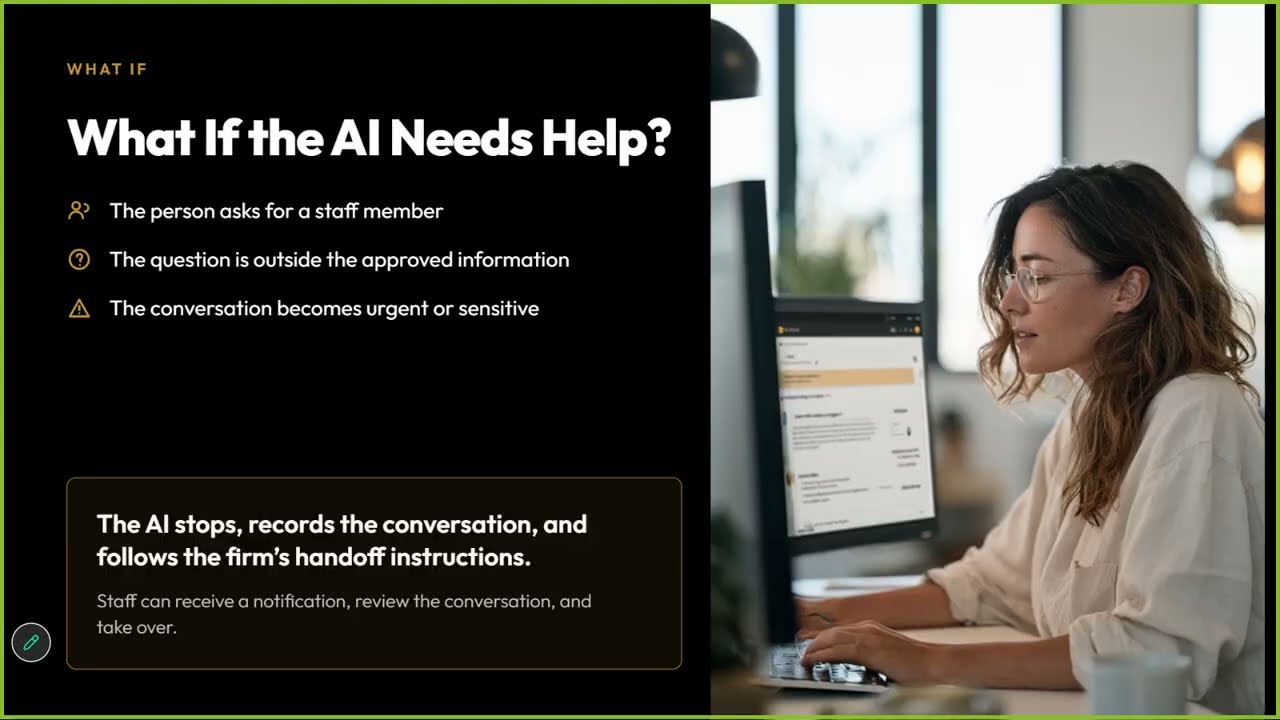
In this practical webinar, Robin Heppell, CFSP, will explain what AI Agents are, why they are becoming valuable for cremation providers, pre-need departments, and funeral homes, and how they can support common communication tasks. You will see how an AI Agent can answer approved questions, capture contact information, identify what a person needs, book appointments, notify staff, and begin the appropriate follow-up. Robin will also explain how conversations, recordings, transcripts, appointments, and next steps can be organized inside Funeral Clients CRM.

Most importantly, this will not be a theory-only presentation. After a brief introduction, Robin will conduct a live demonstration of website chat, browser-based voice, inbound telephone conversations, appointment booking, staff handoff, notifications, conversation records, automated follow-up, and pipeline tracking. You will leave with a clearer understanding of where an AI Agent could fit within your firm—and how it can support your team without replacing the personal care families expect.

What You’ll Learn

  • Why faster response times matter for cremation, pre-need, and at-need inquiries
  • How public-facing AI Agents can communicate through website chat, voice, telephone, text, email, and connected messaging channels
  • How an AI Agent can answer approved questions without guessing
  • How contact information and inquiry details can be captured automatically
  • How appointments can be booked for pre-need meetings, arrangements, urn pickup, and aftercare
  • How staff can be notified when a conversation requires human attention
  • How recordings, transcripts, summaries, and conversation history can be reviewed
  • How follow-up communication can begin after the initial inquiry
  • How pre-need and cremation opportunities can be tracked inside Funeral Clients CRM
  • How Bronze, Silver, and Gold service levels can support different communication and follow-up needs


🎥
Watch the Replay on YouTube:
https://youtu.be/evIn8ne1KxY?si=pSE_rmuKOWb9V4rP

Request Your AI Agent Consultation

From Ransom Note to Marketing Machine

Many funeral homes use several marketing channels, but those channels are often managed as separate activities. One vendor manages the website, another manages digital ads, staff members post on social media, leads arrive in different inboxes, and follow-up depends on spreadsheets, sticky notes, or memory.

That approach can begin to resemble a ransom note: separate pieces assembled without a consistent message, coordinated family journey, or central system.

A well-orchestrated omnichannel strategy gives every channel a specific role. Search creates discovery. Reviews build trust. Social media creates familiarity. Video provides education. Advertising generates response. Funeral Clients CRM captures that response, organizes the contact, and initiates the appropriate follow-up workflow.

How the Major Marketing Channels Have Changed

Google Ads

Google Ads once gave advertisers greater control over individual keywords, match types, bids, and campaign structure. Today, Google relies more heavily on broad matching, responsive ads, automated bidding, audience signals, and AI-led campaign optimization.

For funeral homes, this makes accurate conversion tracking, strong landing pages, geographic controls, negative keywords, and qualified lead data more important than ever.

Local SEO, AEO, and GEO

Local SEO once focused heavily on keywords, citations, links, location pages, and traditional organic rankings. Search results now include map listings, structured data, featured answers, conversational searches, and AI-generated experiences.

Funeral homes must create clear, authoritative content that answers questions about cremation, burial, pre-planning, pricing processes, veterans’ benefits, timelines, paperwork, and what families should do next.

Online Reputation and Google Business Profile

Google Business Profile has become one of the most visible places where families evaluate a funeral home. Before visiting the website, they may see reviews, ratings, photographs, hours, services, directions, and contact information directly in the search results.

Review volume, overall rating, and recent review activity are highly visible trust signals. Funeral homes also need accurate profile information, appropriate categories, current hours, professional photographs, service information, and thoughtful responses to reviews.

Social Media Marketing

Social media has moved beyond basic announcements and occasional community posts. Consumers now spend more time with short-form video, Reels, Stories, carousels, mobile-first content, and algorithmically recommended posts.

Funeral homes can use Facebook, Instagram, LinkedIn, and Pinterest to educate, humanize the firm, support community relationships, introduce staff, explain services, and answer common questions. X and TikTok may play a secondary role depending on the market and audience.

YouTube and Video Marketing

Professional video once required specialized cameras, production crews, lighting equipment, and expensive editing software. Smartphones, microphones, captions, editing apps, livestreaming, and vertical video have made production more accessible.

Authentic handheld video is now widely accepted, but funeral homes must still maintain professional audio, appearance, tone, privacy, setting, and messaging. Video should feel personal without sacrificing the trust and dignity expected of funeral service.

What Happens After Someone Responds?

An advertisement, search result, social post, video, direct-mail piece, newspaper advertisement, television commercial, billboard, or seminar may generate awareness—but the response still needs to be managed.

When someone calls, submits a form, scans a QR code, begins a chat conversation, registers for an event, or requests an appointment, that information can enter Funeral Clients CRM.

The contact can then move into an appropriate workflow that may include:

  • Immediate lead confirmation
  • Email follow-up and reminders
  • Text-message reminders
  • Internal staff notifications
  • Assigned call tasks
  • Calendar appointment links
  • Pre-need educational follow-up
  • At-need escalation and rapid staff response
  • Longer-term nurturing for prospects who are not yet ready

Automation does not replace the funeral professional. It creates a structured bridge to a faster, more consistent, and more personal human response.

About Robin Heppell

Robin Heppell, CFSP is a licensed funeral director, funeral strategy and marketing executive, educator, and founder of Funeral Futurist.

Robin helps funeral homes and cremation providers improve call volume, pre-need opportunities, family communication, marketing performance, and operational efficiency through digital marketing, CRM systems, automation, and artificial intelligence.

With decades of funeral service and marketing experience, Robin combines traditional funeral values with modern strategies designed specifically for independently owned funeral homes and cremation providers.

Frequently Asked Questions

Is this webinar only for funeral homes with large marketing budgets?

No. The principles apply to funeral homes and cremation providers of different sizes. The objective is to connect the channels and processes already being used before adding unnecessary complexity.

Does omnichannel marketing mean we need to use every marketing platform?

No. Omnichannel marketing does not mean being everywhere. It means choosing the appropriate channels, coordinating the message, and ensuring that every meaningful response enters a consistent follow-up process.

Does Funeral Clients CRM replace our advertising platforms?

No. Funeral Clients CRM does not need to manage every external advertising platform. It centralizes contact information, lead sources, communication history, staff tasks, workflows, appointments, and outcomes after someone responds.

Will automation replace personal communication with families?

No. Automation is used to acknowledge inquiries, organize follow-up, notify staff, and prevent opportunities from being forgotten. Personal communication from funeral professionals remains essential.

What does the strategy session include?

Robin will review your current marketing channels, lead-capture process, follow-up system, and business goals. The objective is to identify where opportunities may be getting lost and determine practical next steps for creating a more connected system.

Book Your Omnichannel Strategy Session

Tags: